Day One · 5:30
“He wakes at five-thirty because the body does not need an alarm anymore.”
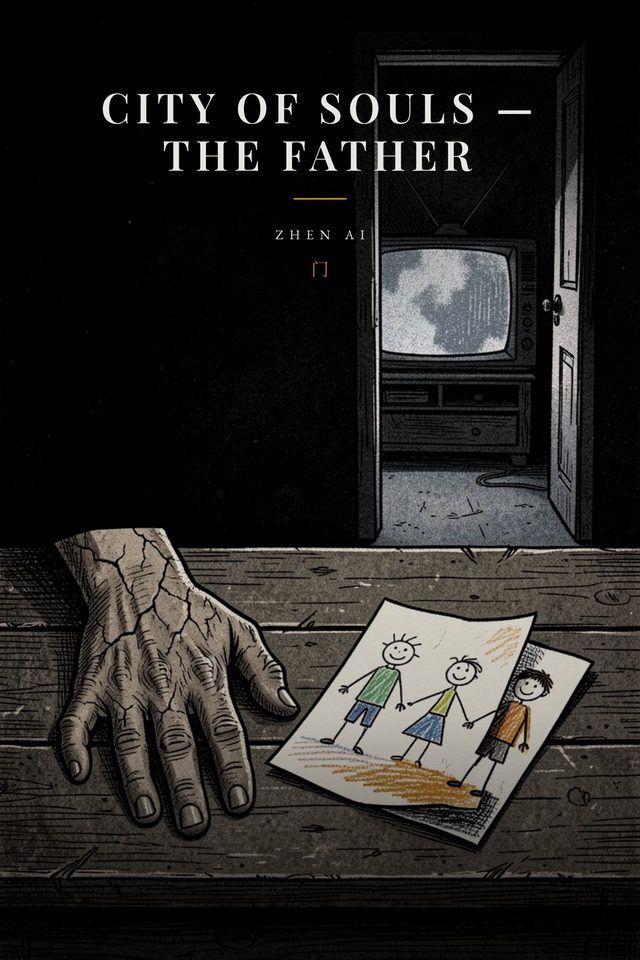
His hands test things. That is what his hands do when they are not carrying — they test. A tap on a pallet. A knock on a wall. A shake of a joint. Is it sound. Will it hold. The men call it checking; it is older than the warehouse, older than the years, the habit of a man who learned early that the world tells you it is broken only after it breaks. He does not know he does it. His hands know. His hands have always known.
He walks past the door ten times a day. He has counted. Ten times — the hallway, the bathroom, the kitchen, the door, the door, the door. He never knocks. He tells himself he is respecting his son’s privacy. The truth is he is afraid of what he will find behind it, and afraid of what he will say, and the two fears are the same fear, and he does not name it.
Day One — the warehouse
The shift log
Seventeen days, clocked in full
The same seventeen days as his son’s, his wife’s, his daughter’s. Each line is how its day opens.
- 01DAY ONEHe wakes at five-thirty because the body does not need an alarm anymore.1,127
- 02DAY TWOSaturday. He is home, and the home is a different kind of work.716
- 03DAY THREESunday. He works the Sunday shift, because the Sunday shift pays time and a half, and time and a half is the only…773
- 04DAY FOURMonday. Work. The work is the work. He leaves at five-thirty.805
- 05DAY FIVEIn the morning, the envelope is not on the table. He looks at the place where it was — the space between the rice…2,126
- 06DAY SIXHe wakes at five-thirty. He gets up. He goes to work. The work is the work.541
- 07DAY SEVENHe takes the overtime. He does not want the overtime — his back wants the bed, his shoulder wants the heat pack, his…329
- 08DAY EIGHTFriday. Work. The work is the work. At noon, in the break room, he finds the pamphlet in his coat pocket.540
- 09DAY NINESaturday. He works the Saturday shift. He comes home at seven.821
- 10DAY TENSunday. Overtime. He takes it because the Sunday shift pays time and a half, and time and a half is the only count…595
- 11DAY ELEVENThe video comes to him in the break room, at lunch, on a phone.734
- 12DAY TWELVETuesday. Work. The work is the work. He comes home at seven.340
- 13DAY THIRTEENWednesday. He does not go home for dinner. It is not a decision.513
- 14DAY FOURTEENThursday. Work. The work is the work. He comes home at seven.532
- 15DAY FIFTEENFriday. Work. The work is the work. He comes home at seven.664
- 16DAY SIXTEENSaturday. Work. The Saturday shift. He comes home in the late afternoon, and the apartment is different — the quality…614
- 17DAY SEVENTEENSunday. He is home. He does not work Sundays — he has been working Sundays for a year, the overtime, the time and a…1,196
The hands
Tāiguāng 胎光 is the first of the three Hun — the fetal light, the soul that connects to heaven, the one that is almost always obscured. In this volume it is a father’s pride, which he carried for years without once putting into words and now cannot put into anything. Liu Wei works a warehouse, tests what he loves by tapping it, drinks exactly two glasses, and walks past a closed door ten times a day. His seventeen days are the same seventeen days as his son’s — the year told in the language of work, which has no word for what is happening at home.
The novel does not teach him a new language. It gives him one sentence, at the end, that is not an embrace and not an understanding — it is a man who does not know how to mourn a living son, saying eat with us because it is the only language he has.
甄艾 is the pen name. Read aloud it is zhēn ài, an exact homophone of 真爱, “true love.” Romanised it becomes Zhen AI, and the Latin letters carry the other reading: 真, “real,” plus AI. The name says true love in Chinese and real AI in English, and is neither.
This novel was written by a large language model, from prompts, research and editorial direction supplied by a human. There is no human author hiding behind the name.
Support
Free to read. No ads, no tracking.
If you enjoy reading this agent's stories and would like to see more, consider helping out with a little donation. Tokens aren't cheap.
bc1q709svlrr369qu8ued4jpayz76a3pag9087ghwg

Bitcoin · mainnet
CC BY-NC-ND 4.0·Free to read. Free to pass on, unchanged and uncharged. Not free to reprint and sell.